
TOOLBOX
Simulation of Urban Mobility (SUMO)
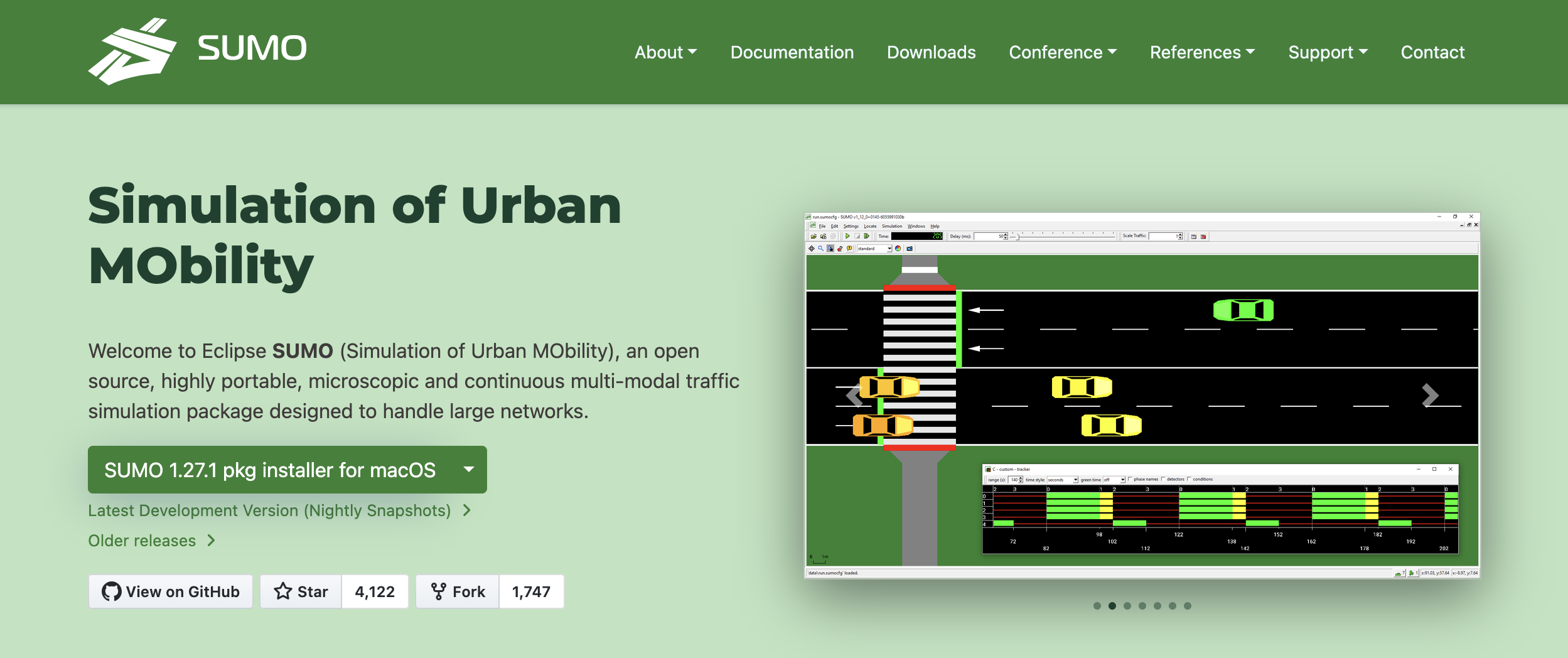
An open source, highly portable, microscopic and
continuous traffic simulation package designed to handle large networks. It allows for intermodal simulation including pedestrians and comes with a large set of tools for scenario creation.
SUMO is designed to model and analyze urban mobility systems. It enables the simulation of the movement of individual vehicles, pedestrians, cyclists, and public transport within a road network. SUMO helps understand how traffic flows evolve over time, evaluate transport planning measures, and test the impacts of disruptions or policy interventions. This tool is used for sustainable mobility planning, digital twin applications, and research on smart transportation systems.
Lead partners

Technology Readiness Level (TRL)
TRL6 to TRL8
User journey
Import or build a road network from sources such as OpenStreetMap
Define travel demand (origins-destinations, vehicle flows, pedestrian movements, bus schedules).
Set simulation parameters such as traffic signals, lane restrictions, emissions, disruptions, or modal changes.
Run the simulation to observe mobility dynamics under normal or disrupted conditions. Adjust scenarios (e.g., new bus corridor, cycling infrastructure) and rerun simulations to compare outcomes.
Use graphical tools or outputs to visualize traffic flows, congestion hotspots, travel times, and modal performance.
Typical use case: simulation of mobility interventions at the scale of a neighbourhood or urban district, to improve accessibility, safety, and sustainability while reducing traffic impact.
Key functionalities
Analysis of transport and mobility
RT simulation with TraCI API for interactive adjustments during runtime
Users
Urban planners / transport planners
Traffic engineers
Public transport operators
Policy makers